Should I Marry a Murderer? The Full Story Behind Tony Parsons and the Netflix Documentary
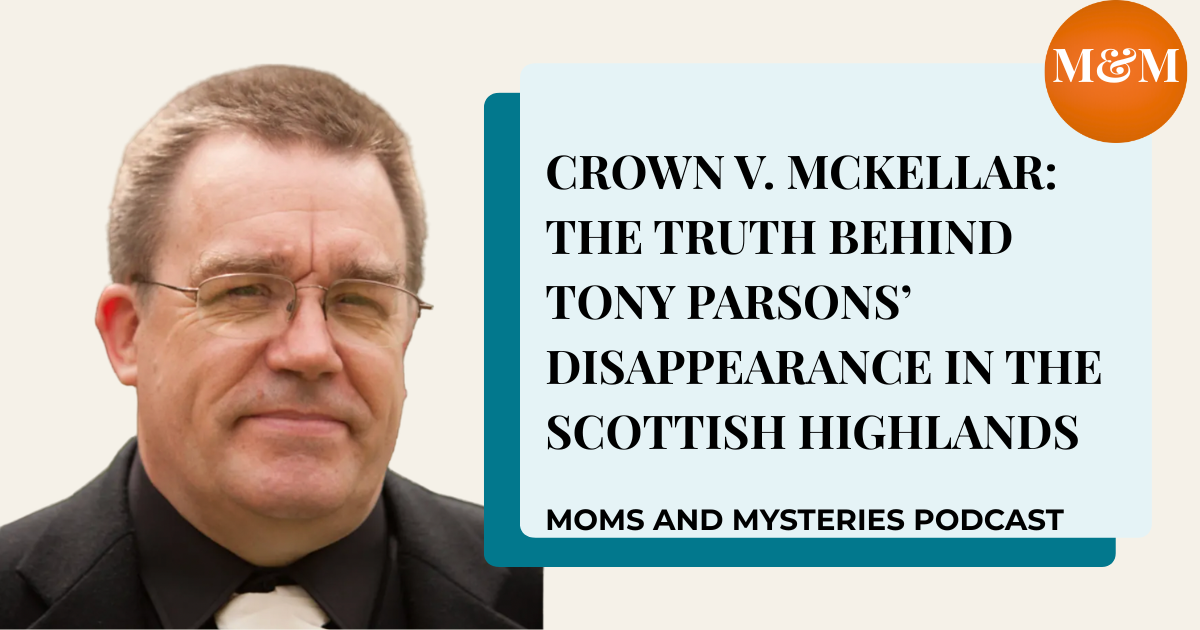
Tony Parsons
As featured on Netflix's Should I Marry a Murderer?, premiering April 29, 2026.
Netflix's Should I Marry a Murderer? tells the chilling story of Dr. Caroline Muirhead, a forensic pathologist who made a horrifying discovery about the man she planned to marry. Her fiancé, Alexander McKellar, confessed to killing a man and spending years covering it up. That man was Tony Parsons, a 63-year-old cancer survivor who vanished without a trace while on a charity bike ride through the Scottish Highlands in 2017. Here is the full story behind the documentary and the decisions that left a family searching for answers for over three years.
On September 29, 2017, Tony Parsons boarded a train headed north into the Scottish Highlands. He had a plan, a purpose, and a route mapped out. He was going to cycle 104 miles overnight from Fort William back to his home in Tillicoultry, raising money for charity after surviving prostate cancer. It was the kind of challenge that defined who he was: disciplined, determined, and generous to his core.
He never made it home.
For more than three years, his family searched for answers while investigators combed some of the most remote and unforgiving terrain in Scotland. No body. No bike. No explanation. Just silence.
The truth, when it finally came out, was devastating, not just because of how Tony died, but because of every decision that was made in the moments after.
Who Was Tony Parsons?
Tony Parsons was a husband, a father, and a grandfather. He had spent years serving as a petty officer in the Royal Navy, including time on submarines where deployments could stretch for weeks at a time. His wife, Margaret, had met him when she was just 17 years old, and their life together had been shaped by his sense of duty and discipline.
Even in retirement, that drive never left him. He had previously completed long-distance walks like the West Highland Way and Hadrian's Wall. He understood what it meant to push through difficult terrain alone. When he was diagnosed with prostate cancer, he did not slow down. He came out the other side of treatment and immediately set his sights on something bigger.
The 104-mile overnight cycling route from Fort William along the A82 was not a casual ride. It would take him through long stretches of isolated road, much of it unlit, cutting through mountains and valleys where cell service could be unreliable and traffic could be sparse. But Tony was confident. He had done hard things before. And this time, he was doing it for a reason.
The Last Known Sighting
Tony arrived in Fort William at around 4:10 p.m. on September 29, 2017. He began cycling south along the A82, passing through Glencoe by around 6:00 p.m. and continuing steadily along his route.
At approximately 11:30 p.m., he stopped at the Bridge of Orchy Hotel. He went inside, had a cup of coffee, and spoke briefly with staff. They encouraged him to stay the night, not an unusual suggestion given the hour and the conditions. The roads in that area can be dangerous even in good weather, and this was not a casual evening ride.
Tony declined. About half an hour later, he got back on his bike and continued south toward Tyndrum.
That was the last confirmed sighting of him alive.
Three Years of Silence
At first, Tony's absence did not immediately set off alarm bells. His family knew he was experienced and understood that delays could happen on a route like this. But by the following day, September 30, he still had not checked in. Calls to his phone went unanswered. Messages went unread.
His son Mike and his daughter began retracing the route, trying to piece together where he might be. At one point, Mike sent him a message asking, "Are you still alive?" It was meant lightly. There was no reason yet to assume the worst.
By Sunday, Mike drove out to search the route himself. He found nothing. No abandoned gear. No sign of shelter. No trace at all.
On Monday, October 2, the family formally reported Tony missing.
Police Scotland built a timeline from CCTV footage confirming his movements through Fort William and Glencoe, and his final stop at Bridge of Orchy. From there, the trail went cold. Search efforts launched across the Highlands involved mountain rescue teams from multiple regions, specialist search dogs, and helicopters scanning the terrain from above. The environment worked against them at every turn. Peat bogs that can swallow objects whole. Steep embankments. Dense undergrowth. Unpredictable weather that could erase evidence within hours.
Despite everything, nothing was found. No bike. No belongings. No sign that Tony Parsons had ever left that road.
In 2018, police received an anonymous letter pointing them toward twin brothers who had reportedly been in the area the night Tony vanished. The letter named Alexander and Robert McKellar, who lived and worked on Auch Estate, a massive, remote property near Bridge of Orchy spanning more than 28,000 acres. Their work as farm hands and deer stalkers meant they knew that terrain better than almost anyone.
Police brought the brothers in for questioning. The brothers acknowledged they had been at the Bridge of Orchy Hotel that night as part of a hunting party. Beyond that, they denied any involvement. Without a body, without a crime scene, and without physical evidence, investigators had nowhere to go. In 2020, police questioned them again. Same result. No confession. No new evidence. No path forward.
Nearly three years had passed. Tony's family marked milestones without him. His grandchildren grew up without their grandfather. And somewhere out on that estate, the truth was buried.
Caroline Muirhead and the Phone Call That Changed Everything
On December 7, 2020, police received a call that immediately stood out.
The woman on the line was emotional but specific. She told them she had information about a crime that had taken place three years earlier near Bridge of Orchy: a hit and run, a body that had been hidden, and a deliberate effort to mislead police. She named the victim: Tony Parsons.
The caller was Dr. Caroline Muirhead, a forensic pathologist. She was not someone prone to speculation. Her entire career was built on evidence. And what she was relaying was something she had been told directly by her boyfriend, Alexander McKellar.
Caroline had met him earlier that year on Tinder. What started as a casual connection escalated quickly. Within weeks, McKellar was talking about a future together, about marriage, about building a life. For Caroline, who had recently come out of an abusive relationship, the intensity and attention felt meaningful.
About five weeks in, something shifted.
They were driving together when a police car passed them. McKellar became immediately tense. The atmosphere in the car changed in a way that felt completely out of proportion to the situation. Caroline pulled over and asked him what was wrong. He told her to hand over her phone. Then her keys.
In that moment, she later said, she realized just how isolated they were. Surrounded by landscape with no quick exit and no one nearby. She tried to regain control of the situation, telling him they needed to be honest with each other. That if something was wrong, they could work through it together.
He responded by telling her he had done something. Something he had gotten away with for years.
The Confession
Once Alexander McKellar started talking, he did not ease into it.
He told Caroline that on the night Tony Parsons disappeared, he and his twin brother Robert had been out drinking. They had been at the Bridge of Orchy Hotel with a group connected to a hunting party, and by the time they left, they were heavily intoxicated. He admitted he was the one driving.
According to his account, they were traveling along the A82 at speed. It was dark, the road was unlit, and conditions were poor. He said he became distracted by headlights coming toward them. Then they hit something.
At first, he claimed they did not even realize what it was. They continued driving for a short distance before pulling into a layby. When they got out to check the damage, they understood what had happened. They had hit a cyclist.
That cyclist was Tony Parsons.
And Tony did not die on impact.
McKellar told her that when they approached him, they could hear a sound. A moan. An indication that he was still alive, still breathing, still capable of being helped. At that moment, they had a choice. They could call emergency services. They could try to help him. They could do anything that might have given him a chance.
Instead, they panicked.
They left him at the side of the road and drove back to the farm on Auch Estate in their damaged vehicle. They abandoned the truck and their phones, took a different vehicle, and returned to the scene. By the time they came back, Tony was no longer moving.
They loaded his body, along with his bicycle and belongings, into the vehicle and drove him back to the estate.
What happened next was not a momentary lapse in judgment. It was a sustained, deliberate effort to make sure no one would ever find him.
Buried on the Estate
After bringing Tony back to Auch Estate, the brothers did not immediately bury him. According to McKellar's account, they first took his body to the back of their home and wrapped it in a tarpaulin. That is where he stayed overnight, steps away from their own front door, with time to think about what they were doing and what came next.
The following day, they made a plan.
They chose a location on the estate known as a kill pit, an area used to dispose of animal carcasses so they can decompose naturally. It is not a place anyone goes casually, and it is certainly not somewhere a search team would prioritize without a specific reason. Using an excavator, they dug into the ground and buried Tony there.
Then they took additional steps to make sure he would stay hidden. They poured bleach over the body. They burned his personal belongings. His bicycle was taken and concealed somewhere else on the estate, reportedly hidden behind a waterfall. It has never been recovered. They repaired the damaged vehicle and told people it had been caused by hitting a deer.
And just like that, Tony Parsons disappeared. No body. No bike. No evidence. For more than three years, that version of events held up while his family kept searching and police kept hitting dead ends.
The Red Bull Can
When Caroline heard what McKellar was planning to do next, she understood that time was running out.
He told her he was worried, not about what he had done morally, but about the possibility of being caught. A water company was scheduled to carry out work near a viaduct on the estate, not far from where Tony had been buried. The ground could be disturbed. Someone could notice something. So he had come up with a solution. He planned to go back to the burial site, dig up the body, and burn it. He even had a date in mind: December 31, 2020.
At that point, Caroline understood that this was no longer just about something that had happened in the past. Evidence was about to be permanently destroyed, and whatever chance Tony's family had of ever getting answers would disappear with it.
At some point after the confession, McKellar took her out to the estate and showed her the location where Tony had been buried. While they were there, she did something small but incredibly important. She dropped a Red Bull can at the site. It was subtle. Easy to overlook. But for her, it served as a marker, a way to guide investigators back to the exact spot if she chose to come forward.
And on December 7, 2020, she did.
The Search and the Recovery
Once Caroline made that call, the investigation moved fast.
On December 30, 2020, Alexander and Robert McKellar were arrested. Both were 29 years old at the time. Five days later, on January 4, 2021, officers established a major incident site at Auch Estate. A large white tent was set up near a farmyard. Mobile police units were stationed at entry points. Forensic teams equipped to handle difficult terrain began working their way across sections of the property. Access roads were closed.
This was not another broad sweep of the Highlands. This was targeted. Focused. Controlled.
The search that followed was methodical. Forensic officers and soil specialists examined the ground, looking for signs of disturbance. Excavation work began. Heavy equipment was brought in to dig at targeted locations, each one chosen based on the information Caroline had provided.
On January 12, 2021, after two days of searching, investigators found what they had been looking for.
Tony Parsons' remains were recovered from a remote area of the estate. The location matched the description Caroline had given, right down to the marker she had left behind. The Red Bull can was still there.
Forensic evidence, along with the brothers' own admissions, indicated that Tony had survived for a period of time after being struck, potentially up to 20 to 30 minutes. Time that might have made a difference if help had been called.
For his family, that detail was devastating.
The Trial and the Sentences
The case reached court in 2023, and it came with complications.
The prosecution's key witness was Caroline Muirhead. Without her, the case would have looked very different. But on the second day of proceedings at the Glasgow High Court, when the jury was set to be seated, Caroline did not show up. Police and a gamekeeper eventually located her near a loch. When she was found, it was clear she was struggling. The pressure of everything she had been involved in, the confession, the investigation, the role she had played, had taken a serious toll. The judge paused proceedings to assess the situation.
Prosecutors had to consider the reality of moving forward without a fully reliable key witness. Ultimately, the Crown made a decision. Instead of pursuing a full murder trial, they accepted a plea to culpable homicide.
That decision did not sit well with Tony's family.
In July 2023, nearly six years after Tony set out on that ride, the case reached its conclusion.
Alexander McKellar, the driver, pleaded guilty to culpable homicide. He admitted that he had struck Tony with his car and failed to seek medical assistance despite knowing Tony was still alive. His brother Robert did not plead guilty to homicide, but both men admitted to attempting to defeat the ends of justice through their efforts to conceal the body and destroy evidence.
Alexander McKellar was sentenced to 12 years in prison. Robert McKellar received 5 years and 3 months. Both sentences were backdated to their arrest in December 2021.
During sentencing, the judge described their actions as "grave and serious crimes" and acknowledged that no outcome in court could truly reflect the loss experienced by Tony's family.
Inside the courtroom, the Parsons family sat just rows behind the two men responsible. They later described the brothers as showing no remorse, carrying themselves with what the family called an air of arrogance. At no point did either man turn to face the family. There was no acknowledgement. No visible reaction to the impact of what they had done.
Tony's son Mike later said the plea "didn't sit well" with him. He believed the full story had not been told in court, that the brothers had taken key details with them, and that a jury hearing everything might have reached a different conclusion. From the family's perspective, the sentences felt insufficient for a series of deliberate choices made over years to ensure Tony would never be found.
Where is Alexander McKellar Now?
Alexander McKellar is currently serving his 12-year sentence in a Scottish prison for culpable homicide and attempting to defeat the ends of justice. Because his sentence was backdated to his arrest in December 2021, he is not eligible for parole until at least late 2027. His twin brother, Robert McKellar, who received a shorter sentence of 5 years and 3 months, is believed to have already been released.
What Happened to Caroline Muirhead?
Even after the trial ended, the ripple effects of this case continued.
For Caroline Muirhead, coming forward changed the course of her life in ways she likely never expected. She later described feeling unsafe, believing that when McKellar was eventually released, he would come looking for her. She said, very plainly, "He will knock on my door."
According to her account, she was asked by police to continue interacting with McKellar for an extended period while they built their case. During that time, her role became known in the local community. People began to treat her differently. She described being mocked, feeling isolated, and experiencing a level of hostility that added to the pressure she was already carrying.
She raised concerns about how police handled the situation, including the level of protection she was given. Those concerns led to a broader investigation. In August 2023, Scotland's police watchdog was directed to look into potential misconduct related to how the case had been managed. Before those allegations could be fully examined, two officers connected to the complaints resigned, meaning some of those potential issues were never formally resolved.
After three and a half years of uncertainty, Tony's family was finally able to bring him home and lay him to rest. It did not undo what had happened. But it gave them something they had been denied for a very long time.
A man set out on a bike ride to raise money after surviving cancer. He was struck by a drunk driver, left alive at the side of the road, and then deliberately hidden from the people who loved him for more than three years. The only reason his family ever got answers was because a woman trusted her instincts, dropped a can of Red Bull in the dark, and made a phone call.
Listen to the full episode of Moms and Mysteries for the complete breakdown of this case.
Related Cases
More cases you'll want to follow


Sources:
Man disappears during 104-mile cycle from Fort William to Tillicoultry
Tony Parsons: How a Red Bull can helped solve mystery of missing cyclist in Argyll
Driver who killed cyclist Tony Parsons then buried body is jailed
‘What they did was evil’: twins who buried cycle crash victim finally face justice
Evil brothers buried charity cyclist in stink pit on shooting estate - Protect the Wild
Cyclist’s body found buried in stink pit on infamous Auch Estate – Raptor Persecution UK
Missing Tony Parsons: Police incident site set up at Highland farm yard
https://cursa.app/en/article/the-scottish-highlands-geography-history-and-natural-beauty